Start with sequences
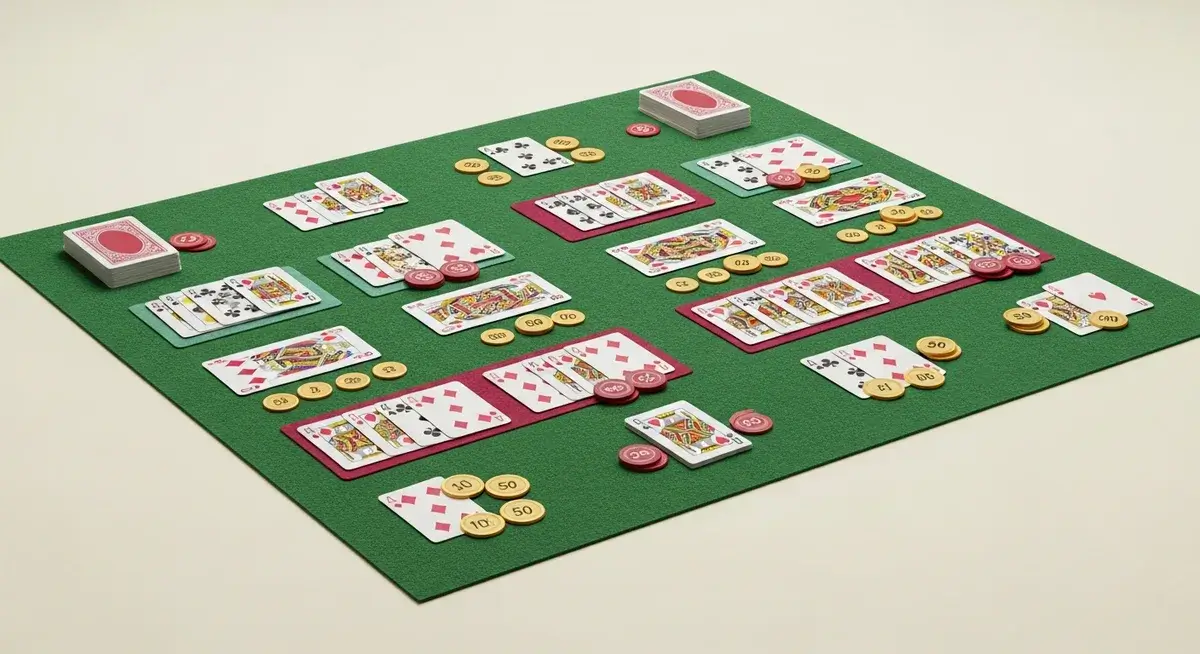
A sequence groups consecutive ranks in one suit. A pure sequence uses its natural cards; a joker-assisted run is an impure sequence under the selected format. Begin by identifying a pure run such as 5♥ 6♥ 7♥.
A set groups equal ranks in different suits, such as 8♣ 8♦ 8♠. Read the format’s requirements for sequences, jokers and the final declaration together.
Choose the format before the table
Points, pool and deals organise a rummy session differently. Compare the scoring unit, the number of rounds and the rule for completing the session.
Keep a practice hand visible while reading the declaration checklist. Group completed runs together and identify the cards that still need a place.
Read card values in context
In common 13-card scoring, face cards and aces count as 10, numbered cards use their face value, and jokers carry zero points. Apply the selected format’s sequence and declaration rules before adding the count.
For an illustrative group K♣, 7♦ and 3♠, the face-value total is 10 + 7 + 3 = 20 points. The final hand score also depends on the recognised groups and the table’s scoring limits.
Make each practice round useful
Pick a single learning goal: recognising a pure sequence, choosing a discard or checking a declaration. Record what changed between the first arrangement and the final groups.
Use the linked game profiles to continue with a familiar name, and the account guides for publisher identity, device settings and support preparation.
A few good questions
What is a pure sequence?
A run of consecutive ranks in one suit using the natural cards required by the selected rummy format.
How do points, pool and deals differ?
Compare their scoring unit, session structure and completion rule. The selected table’s published format defines the details.
How should I practise a declaration?
Arrange a sample hand, identify the required sequences and sets, and check each group against the declaration rules.